Listen to this article
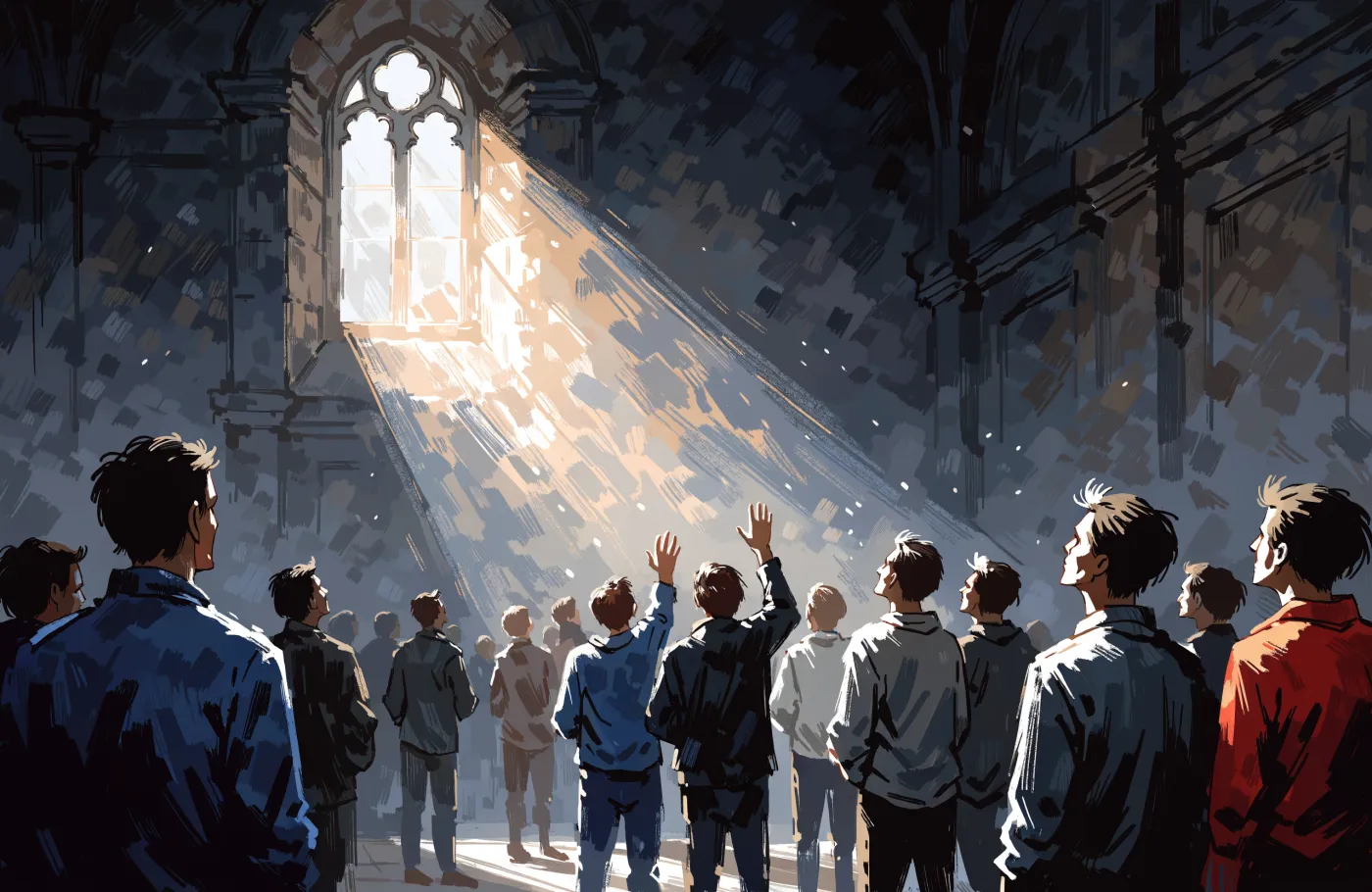
People who visit for the first time often arrive braced for one of two things. Either an ancient service they will not be able to follow, or a modern one with some Hebrew decoration applied to the outside. What surprises them is that neither description fits, and that the room does not appear to find this a contradiction.
The name we chose says it out loud. Modern anthems, ancient rhythms. Most people hear that as a description of our music. It is really a description of our theology.
The Psalms were somebody's new music
It is easy to forget that the Psalms were written. Someone sat down and composed them, in a particular decade, with the instruments available at the time, and other people found them strange before they found them familiar. They were the contemporary worship music of their own moment.
They were also written to be used again. That is what a psalm is for. The whole collection assumes a future room, full of people who were not there when it was written, singing it as if it were theirs.
The oldest thing we do and the newest thing we do are the same thing.
Ancient rhythms are not the same as ancient sounds
The rhythms we keep are the ones God gave Israel and never withdrew. A week that ends in rest. A year that turns through the appointed feasts. A Scripture read straight through and begun again. Those are older than the church, older than the synagogue, older than the exile.
None of that dictates a musical style. Shabbat is a shape, not a sound. You can keep the shape of the day exactly and sing into it in the language of the city you actually live in — which, for us, is New York in this decade.
What that means in the room
A Saturday morning holds both without much friction. Hebrew prayers that have been said for a very long time, in the language they were written in. Songs written recently, sung loudly. The Torah taken out and read, on the same portion synagogues worldwide are reading that week. Teaching in English, in ordinary speech.
Nobody is asked to pretend the modern songs are ancient, and nobody is asked to treat the liturgy as a museum piece. Both are doing the same job.
The honest objection
Some people feel the modern music makes the service less serious, and it is worth saying that this is not a foolish worry. Music can be used to manufacture a feeling and call it worship, and that failure is real.
The safeguard is not the age of the song. It is whether the words are true and whether the Word is opened afterwards. An old melody sung thoughtlessly is no safer than a new one. What keeps a gathering honest is the reading, the teaching, and a congregation willing to say when something rings false.
Come and hear it
It is genuinely difficult to describe and very easy to experience. Shabbat Morning is Saturday at 11:00 AM, in person in Manhattan. Nothing is required of you but a chair.
Come and see for yourself
Shabbat Night is Friday at 7:00 PM and Shabbat Morning is Saturday at 11:00 AM, in person at 250 E 61st St, New York, NY 10065. No registration, and nothing you need to know beforehand — everything is explained as we go.
Keep Reading